
In recent years we see many DJs and artists wearing a mask. Often it's a purely aesthetic choice, and it works. But when it comes to newcomers, there's always the idiot who, instead of listening to the music, makes jokes about «cosplay» and calls anyone who hides their face a clown. Sometimes they're right, sometimes they're not.
To really understand the gesture you have to go back to the early years. Back then the parties were very small. Not raves in the classic sense, but private gatherings, built with limited means and great care. The scale was intimate, but also exposed and often unruly.
The locations were often abandoned rural houses, places never meant to host people. Inside there was pure chaos: no rule on genre, no limit. But every choice carried a precise weight.
There was no rigid format, no single language to follow. The centre wasn't the image, but the experience. And exactly for that reason safety became essential: protecting those who took part meant protecting everything.
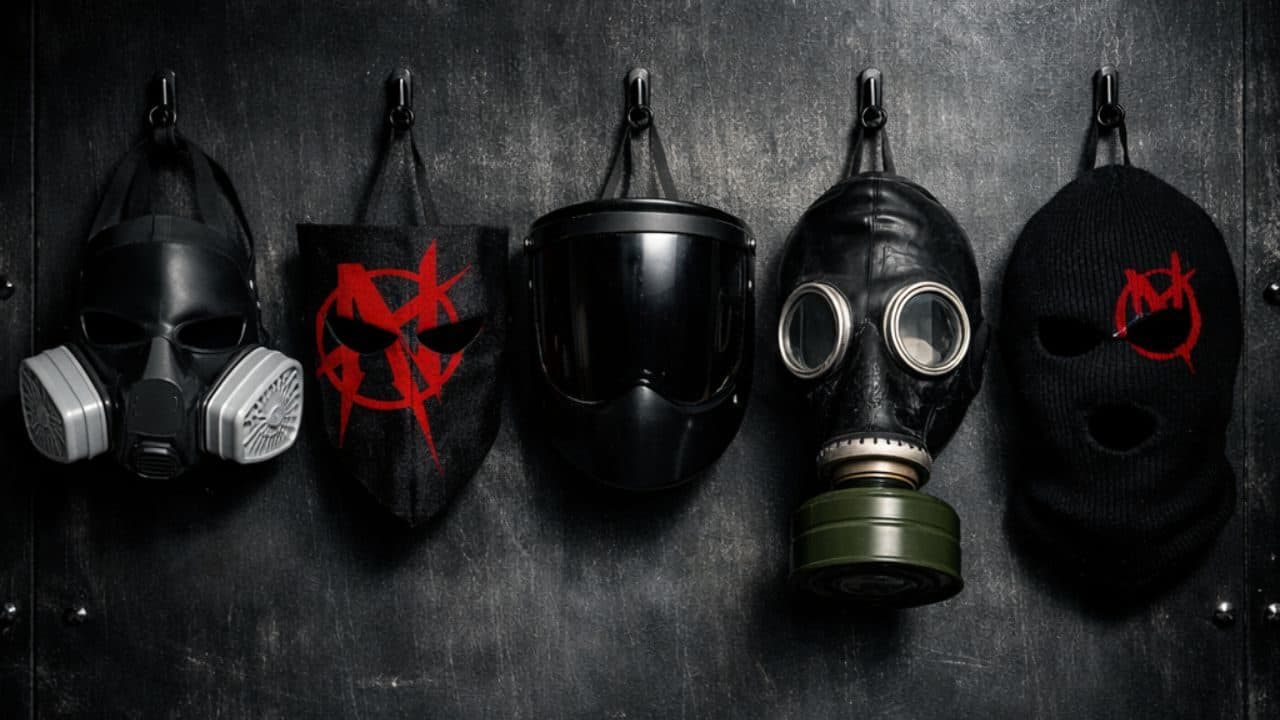
When you look at certain images today, it's easy to stop at the surface and think of an accessory. But with Chaos Rules the reading is different: the origin of this custom answered a precise need.
At the start, every member of the crew wore a balaclava. No one excluded. There was no model to follow: just a shared gesture, common to everyone.
That gesture answered a very clear need: to avoid easy identification, to reduce the risk tied to photographs. These were the years of the first camera phones, and that presence changed everything. Privacy was far more fragile than today.
So the covered face was a protection. It served to defend those who were part of the collective. Over time different masks appeared, sometimes classic, sometimes homemade. They weren't yet a precise code: they were occasional presences, tied to research and necessity.
Despite everything, legal problems were not absent, mostly due to an extremism of freedom that at times took on a disturbing tone. Within five years, those almost unreal parties ceased to exist after various developments.
All of this shifted the discourse from mere protection to a more precise form of recognition, without erasing the practical origin of the gesture. The full masquerade took hold only in specific secret parties, very different from their predecessors.
Today most Chaos Rules members don't have a mask, nor ever had one. Simply because the need for anonymity is no longer essential and the crew has moved onto a more professional path. For those who still use it, the meaning stays clear, but it's no longer a necessity.
To answer the opening question: the main reason remains safety. Not a pose, not a stage effect, but a choice born from experience. And that is what makes it very different from a simple aesthetic.